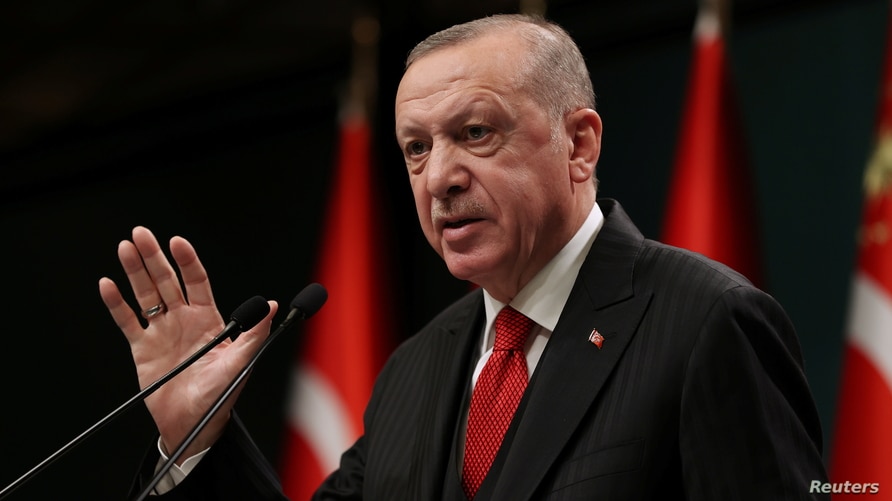
At the beginning of the Arab Spring, the governmental structure and policies of Turkey was the ultimate model that countries like Egypt, Iraq, or Syria were trying to imitate. Turkey used to represent the successful application of democracy, independent government, and the economic strategy administrated by Kemal Dervis in the early 2000s. It was the successful model of secular society in a large Muslim population. Also, its foreign policy of not having problems with neighbors catapulted it to be a European membership candidate. However, since the moment Recep Tayyip Erdogan stepped into his position in their government, this model evaporated along with all the progress made, facing a new era of social, economic, political, and foreign policy setbacks.
The country has been facing a deep economic depression since 2016. The first cause was the Turkish government’s gradual involvement in the Syria war back in 2011, which ended up with military interventions five years later. Erdogan’s goal, taking a heavy toll on the economy, was to become a crucial actor in the Syrian war map to eventually be considered part of the future peace plan.
Along with this, the second cause was the failed coup during the summer of 2016. Officially, the attempt was perpetrated by low-ranking military officers lined up with Fethullan Gulen and his popular movement called Himzet (a moderate, pro-Western brand of Sunni Islam appeals to many well-educated and professional Turks). Strikingly, the coup gave Erdogan the keys to take control of the judiciary, to arrest civilians and teachers, to expel and suspend soldiers from the military, to prosecute many of them while others are still waiting jailed pending trial after four years, and to defang the press and dismay critical journalists. Thus, this led the way to “centralize power and the ability to extort control in different areas of life with almost unchecked authority.”
Since then, the Turkish economy has progressively deteriorated, and consumer and investor confidence has been severely rattled. Nowadays, the country faces a rise of inflation of 4%, placing the lira at its highest rate against the dollar last November, more than 10%. After this data was made public, Erdogan presented a new economic route to save the lira. His reform will be based on “lower inflation and international investment.” An indication that his plan has nearly zero credibility for locals and investors is that citizens’ interests in gold and foreign exchange have increased and it will continue until real changes spring up. Another sign is that in Istanbul’s bazaar with gold coins and jewelry are selling at 3% above the international market.
Ebrar Turzna, using a fictional name to protect her identity, a local Turkish citizen, confess to this blog that the economy “is the worst it has ever been.” For her, things are only getting worse. “Richare getting richer; poorare getting poorer. Also, there’s big unemployment. Whatever you do, whatever is the level of education you achieve, it doesn’t matter. You either have someone you know in the company,or you do extreme things to be apart from the rest of the population to be just considered. It didn’t use to be like this”.
In reference to Erdogan’s plan, she recalls that “nothing will save the Turkish Lira.” “Since he (Erdogan) was elected, the only thing he gave us is the hospital system. Nothing to be proud of”. For her, a government change “is a must.” “They’ve been there for 20 years,and it’s not normal. We need young new people, even if there is a chance for them to ruin it. Let them do it”. In essence, their political atmosphere turns out a clear “conflict of interest,” she exclaimed.
To hide the terrible situation the country is facing in economic terms, Erdogan took Hagia Sophia as a deterrent weapon. At the beginning of last July, he formalized the ancient basilica conversion and evoked its museum status and turned back it into a mosque. This is part of his plan to revive Islam as a way of skewing attention from the real problems of the country and the fact he is losing support within national land (in 2019, he lost control in five of Turkey’s six biggest cities, including the economic engine of the country Istanbul, and the capital Ankara).
Ebrar Turzna confirms that the government wants “to turn Turkey into an Islamic country.” They clearly run the country bases on Islamic decisions that effects the way citizens live”. She explained that on normal TV, some things are censured such as cigarettes or alcohol. “They want people to aware all these and expect to be normal.” Banning these images, Ebrar sees an increase in violence in the population. “During these days, we can see husbands killing their wives, animal murderers,and things like that. But the government is letting a sleeping dog lie”.
But as Ebrar, there are States like Greece, the US, and most of the EU countries that have seen Erdogan’s policies’ growing increasingly more dangerous and have opened tension forefronts with him. Among them, we should highlight France in the first place. While Macron is trying to eradicate the extremist Islamism that cost the life of many innocents (the last one was the beheading of a teacher who showed cartoons of the Prophet Muhhamad in October), Erdogan shows an opportunity to create an echo in the Muslim world. He knows that part of the Muslim world believes that France is anti-Islam regime. Again, the most obvious explanation of this action is to divert attention from the economy and the government’s poor policing.
However, his back and forth with France also has a geostrategic component. In his attempt to switch the country focus, he is presenting himself as the protector of Muslims and Islam. His aim is not only to flex muscle against the EU major power, but also to compete against the two biggest Sunni states: Saudi Arabia and Egypt. Therefore, religion is issued to an end, and it’s to play an important role in the Middle East’s geopolitical scene.
A similar situation is Greece. Erdogan is still having an open conflict with the Greeks due to divided Cyprus, refugees flow and contests oil and gas drilling rights in the Eastern Mediterranean. Last summer, tension heightened between the two countries due to a Turkish gas ship exploration entrance in these disputed waters claimed their sovereignty. The higher value of these parts of the sea is because of the possibility of holding natural gas, which provides many benefits based on power and energy independence.
Furthermore, Erdogan has been defying the EU using their mutual dependence in many areas as a weapon to act and expand its influence without real opposition from their trading European partners. Erdogan uses immigrants in a rather cynical way, both those from the Syrian catastrophe and Turkey’s own nationals, using them as a “weapon” against the kind and overly generous attitude of the EU. For Erdogan, immigrants are a bargaining chip to put pressure on Europe. For the EU, immigrants themselves are people, with the same dignity as their citizens, and for this reason they must be protected, because not doing so would be tantamount to violating their sacred respect for human values, which are one of the foundations of the EU itself. It should not be forgotten that in Germany live, with a low level of cultural integration, almost 2.7 million Turks, “orphans” of their homeland and therefore easily manipulated by the victimizing propaganda of Erdogan and his government. Of course, few of them wonder why, the growing erosion of the rule of law in Turkey is sinking international confidence in their country, its chances of economic growth and, as a consequence, its chances of one day returning to its homeland.
In the end, Erdogan’s negligence to become a “super power” is risking not only the money, rights, freedoms, democracy, and development of its own people, but it is risking his most important partner, the European Union. Being part of this club is a lifetime opportunity for Turkey to return to its privileged position in 2000 and to influence different Arabs countries to follow its lead. But in the end, politicians differ between those who want the common interest from those who seek their own interest.

